To contact us Click
HERE
Just a few months ago India announced they were authorizing  a local drug company to make a generic copy of a cancer drug made by Bayer. This opened a lot of eyes and Roche for one looked into their pricing on cancer drugs and is reducing prices on some of their drugs too. It appears the move is on to make drugs affordable.
India Authorizes Local Drug Manufacturer to Make and Sell Generic Copy of Patented Bayer Cancer Drug To Make It Affordable
Part of the response has been with big pharma buying generic drug companies. The new policy is slated to begin before the end of this year. This certainly is good news for patients in India who are in the poverty levels that have not been able to get treatment, especially with cancer drugs. BD
(Reuters) - India has put in place a $5.4 billion policy to provide free medicine to its people, a decision that could change the lives of hundreds of millions, but a ban on branded drugs stands to cut Big Pharma out of the windfall.
From city hospitals to tiny rural clinics, India's public doctors will soon be able to prescribe free generic drugs to all comers, vastly expanding access to medicine in a country where public spending on health was just $4.50 per person last year.
The plan was quietly adopted last year but not publicized. Initial funding has been allocated in recent weeks, officials said.
But the initiative would overhaul a system where healthcare is often a luxury and private clinics account for four times as much spending as state hospitals, despite 40 percent of the people living below the poverty line, or $1.25 a day or less.
Under various existing programs, around 250 million people, or less than a quarter of India's population, now receive free medicines, according to the health ministry. "If doctors are found to be prescribing medicines which are not on the list, or which are branded, then disciplinary action will be initiated," he said.
http://www.reuters.com/article/2012/07/05/us-india-drugs-idUSBRE8630PW20120705?feedType=RSS&feedName=healthNews&utm_source=twitterfeed&utm_medium=twitter&utm_campaign=Feed%3A+reuters%2FhealthNews+%28Reuters+Health+News%29


 This story appeared in the Chicago Sun-Times in 1994 when I was first launching the Tutor/Mentor Connection. It's one of many stories that have been written since then. See an archive on the Tutor/Mentor Institute web site.

 This is the front page of a 1999 story in the URISA Newsletter (see pdf).
 It's part of a "Rest of the News" strategy which I've been promoting since 1994 as an effort to turn "bad news" media stories into advertising that draws volunteers and resource providers into neighborhoods where tutor/mentor programs are needed. Without having help from GIS volunteers like Jim I could not be making these maps.

 Chicago schools Illinois schools I want this widget for my site
This map does not include poverty overlays, or show which schools are under performing, but I'm sure others may be developing map-tools to do this. The Interactive Map that the Tutor/Mentor Institute, LLC hosts includes these features and points to the location of non-school tutoring and/or mentoring programs. However, our map has not been updated in three years and without the resources to do this we can't expand it's impact.
Chicago schools Illinois schools I want this widget for my site
This map does not include poverty overlays, or show which schools are under performing, but I'm sure others may be developing map-tools to do this. The Interactive Map that the Tutor/Mentor Institute, LLC hosts includes these features and points to the location of non-school tutoring and/or mentoring programs. However, our map has not been updated in three years and without the resources to do this we can't expand it's impact.
 I hosted another Tutor/Mentor Leadership and Networking Conference on June 14, 2012 at First Unitarian Church in Chicago.
I've been hosting these every six months since May 1994 and in every one I've shared maps like these to illustrate the vision of the Tutor/Mentor Connection for mentor-rich non-school programs to reach kids in all high poverty neighborhoods.
For this vision to be achieved leaders in business, politics, religion, health, law, sports and entertainment each need to be using maps to support volunteer and donor mobilization strategies that reach programs in all parts of the region.
I've not been able to make new maps for more than a year since our money ran out and we no longer have a map-maker on staff. If you'd like to join with us as a partner, sponsor or volunteer we can continue to provide the maps that others can use to support their own decision making.
I hosted another Tutor/Mentor Leadership and Networking Conference on June 14, 2012 at First Unitarian Church in Chicago.
I've been hosting these every six months since May 1994 and in every one I've shared maps like these to illustrate the vision of the Tutor/Mentor Connection for mentor-rich non-school programs to reach kids in all high poverty neighborhoods.
For this vision to be achieved leaders in business, politics, religion, health, law, sports and entertainment each need to be using maps to support volunteer and donor mobilization strategies that reach programs in all parts of the region.
I've not been able to make new maps for more than a year since our money ran out and we no longer have a map-maker on staff. If you'd like to join with us as a partner, sponsor or volunteer we can continue to provide the maps that others can use to support their own decision making.
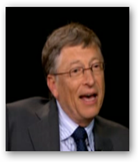 and his opinion of where each excels etc. Sometime he says in the next 10 years we will be able to cut the existence of malaria. He also discusses HIV and how to attack the disease and what has been done thus far and says it will be a while before we really can reduce the numbers. Bill Gates was always a science fan and with his work with the Foundation he’s been able to expand his learning.


 a local drug company to make a generic copy of a cancer drug made by Bayer. This opened a lot of eyes and Roche for one looked into their pricing on cancer drugs and is reducing prices on some of their drugs too. It appears the move is on to make drugs affordable.